
Pendahuluan
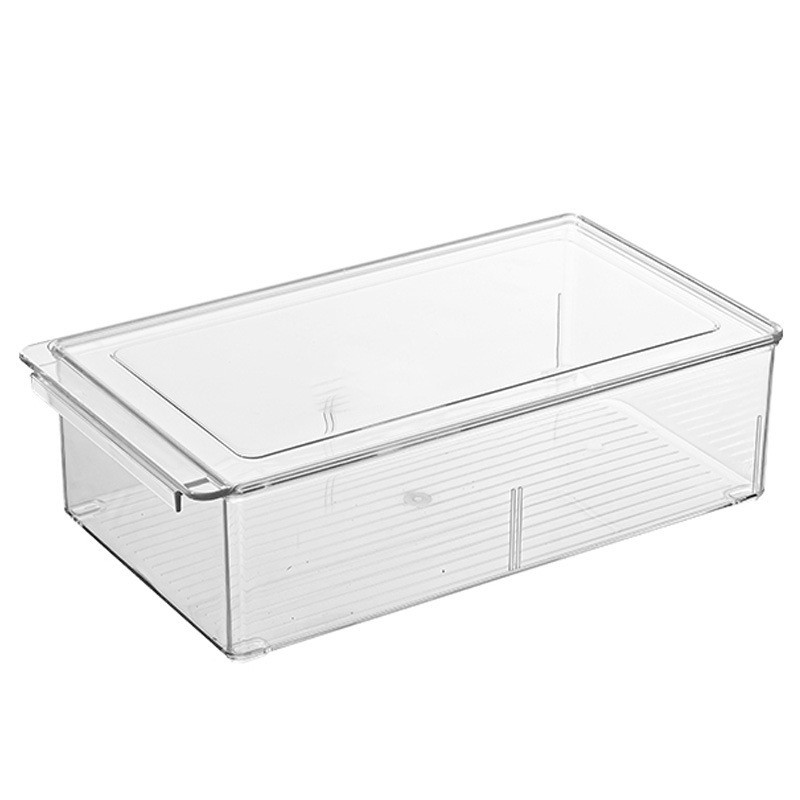
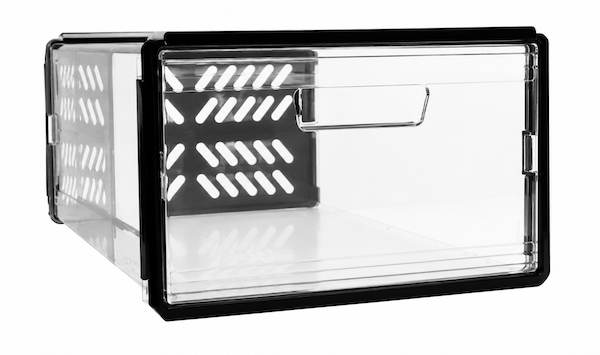
Packing for a camping trip always comes down to the same tension: too much gear, not enough space, and too little time to sort it out before you leave. An kotak lipat penyimpanan berkemah luar ruangan addresses that problem directly — combining the structural protection of a hard case with the space efficiency of a collapsible design. Whether you’re packing a car trunk for a weekend trip, organizing a family base camp, or building a retail assortment for outdoor buyers, the right folding storage box changes how gear gets transported, accessed, and stored. This article explains what makes a well-designed outdoor camping storage folding box worth sourcing and what to evaluate before placing an order.
Why Traditional Storage Boxes Fall Short for Outdoor Camping
For years, campers have made do with two imperfect options: rigid plastic bins and soft fabric bags. Both solve part of the problem, but neither was designed around how outdoor camping actually works.
Hard-shell storage bins offer real structural protection. They stack reliably, resist moisture, and keep contents from shifting during transport. The problem is that they occupy the same volume whether they’re fully loaded or empty. A camper who packs four rigid bins for a trip still has to find space for four rigid bins on the drive home. For buyers managing vehicle cargo space — or retail shelf planograms — that fixed footprint creates a recurring logistical constraint.
Soft fabric bags solve the empty-space problem but introduce new ones. A duffel or stuff sack compresses when empty, but it offers no structural integrity when loaded. Stacking soft bags in a vehicle means the ones on the bottom absorb the weight of everything above them. Fragile items, glass containers, and anything that needs to stay level during transit are poorly served by a bag that shifts and slumps with every turn.
The outdoor environment adds further complications that neither option handles well. Extended UV exposure degrades many standard plastics over multiple seasons. Temperature swings between cold mornings and hot afternoons cause materials to expand and contract repeatedly. Dusty trails, muddy campsites, and wet loading zones all accelerate wear on closures, hinges, and handles. A storage solution that works in a climate-controlled garage may perform very differently after a full camping season.
For B2B buyers sourcing products at volume, these failure modes matter. A camping storage product that generates returns or complaints within one season creates downstream costs that outweigh any upfront savings on unit price. The demand in the market is for an kotak lipat penyimpanan berkemah luar ruangan that performs like a rigid container when loaded, stores flat when empty, and holds up through repeated use across varying conditions. That combination of properties is what the best folding camping boxes are engineered to deliver — and what buyers should be benchmarking against when evaluating suppliers.
What Makes an Outdoor Camping Storage Folding Box Ideal for Field Use
The performance gap between a well-engineered kotak lipat penyimpanan berkemah luar ruangan and a generic folding container becomes clear in field conditions. The design features that matter most aren’t always the ones prominently featured in product listings — which is why buyers benefit from understanding the technical criteria before comparing options.
Collapse ratio and packed dimensions. The defining feature of a folding box is how much it reduces in size when not in use. The most functional designs collapse to approximately one-fifth of their full volume. For a 60-liter box, that means going from a full-height container to a flat panel roughly 8–10 cm thick. When you’re packing return cargo, managing retail backroom space, or calculating container loads for import orders, this ratio directly affects your cost per cubic meter.
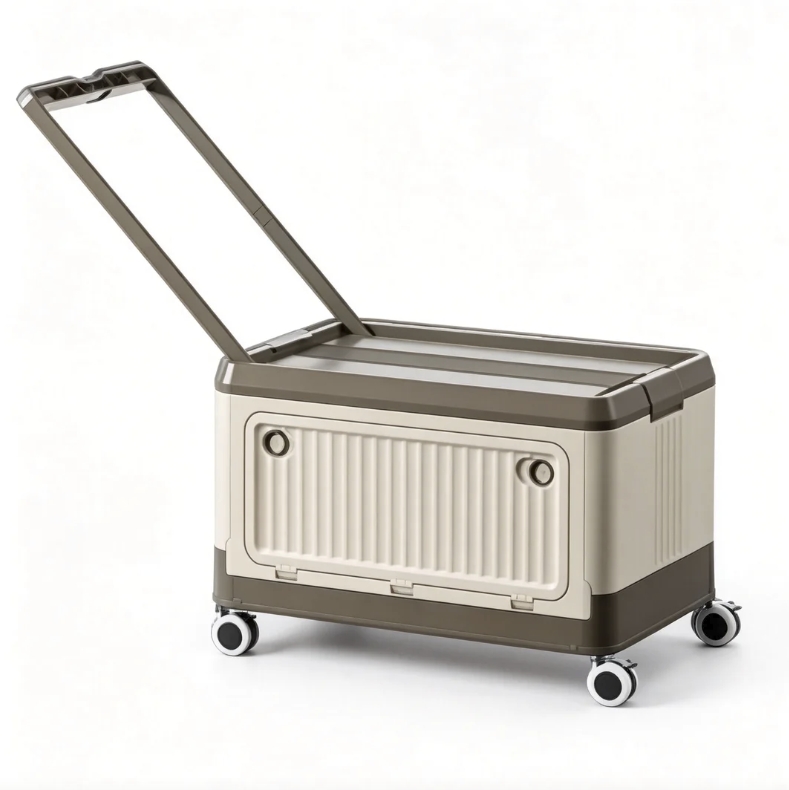
Structural integrity under load. Collapsibility only creates value if the box holds its shape and load when fully deployed. Look for reinforced rib structures on the base and side panels — these distribute weight evenly and prevent the walls from bowing under pressure. The FG Houseware kotak lipat penyimpanan berkemah luar ruangan supports a static load of over 80 kg, which means multiple packed units can be stacked in a vehicle without compressing the bottom box. That’s not a specification every folding box on the market can meet.
Material selection and food safety. Food-grade polypropylene (PP) is the relevant material standard for camping storage, particularly when the box will be used to transport food, cookware, or items that contact food preparation surfaces. Food-grade PP resists moisture absorption, doesn’t off-gas chemicals under heat exposure, and maintains rigidity across a wide temperature range. It also cleans more thoroughly than lower-grade alternatives — an important consideration for buyers whose end customers are using these boxes for multi-purpose storage.
Closure systems and access. Reinforced buckle closures on an kotak lipat penyimpanan berkemah luar ruangan serve two functions: they secure the lid under load, and they keep the box from accidentally unfolding during transport. Well-designed closures should be operable with one hand and accessible to users across a range of physical strength and dexterity. Latches that require two hands to open, or that loosen after repeated use, become a friction point at camp that buyers hear about in product reviews.
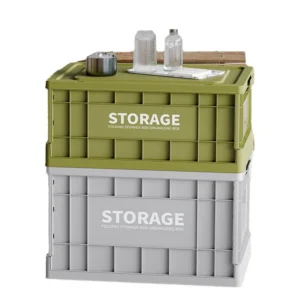
The lid is a functional surface. A reinforced flat lid on a folding camping box does more than close the container. At camp, a sturdy lid functions as a prep surface, a seat, or a temporary side table — reducing the number of separate items a camper needs to carry. This dual-use functionality is a genuine differentiator in the camping storage category, not just a marketing point. For retail buyers positioning products in the outdoor lifestyle segment, it’s a feature that justifies a higher price point and supports stronger in-store storytelling.
Comparison: Outdoor Camping Storage Folding Box vs. Traditional Alternatives
| Folds when empty | ✅ ~1/5 volume | ❌ Fixed size | ✅ Compresses, unstructured |
| Static load capacity | 80 kg+ | Typically 30–50 kg | Minimal |
| Lid usable as a surface | ✅ Reinforced flat lid | ⚠️ Model-dependent | ❌ No |
| Bahan | Food-grade PP | Standard HDPE/PP | Polyester/nylon |
| Moisture resistance | ✅ High | ✅ High | ⚠️ Moderate |
| Stackable when loaded | ✅ Yes | ✅ Yes | ❌ No |
| Custom branding | ✅ Pantone + logo print | Limited | Limited |
| Best application | Camping, car trunk, retail assortment | Warehouse, garage, industrial | Day hike, light travel |
Specifications reflect typical product category benchmarks. Individual product performance varies by manufacturer and model.
Size Options and Use Scenarios — From Day Trips to Base Camps
One of the most practical advantages of sourcing a well-designed kotak lipat penyimpanan berkemah luar ruangan line is the size range. A product that comes in a single volume forces buyers into compromises; a line that spans multiple capacities lets buyers build assortments matched to their specific customer base.
The FG Houseware series offers eight size configurations from 20L to 90L. Here’s how each volume range maps to real-world camping use cases:
- 20L–30L — Day trip and backpacker configuration. This range fits trail snacks, a compact cook set, a first aid kit, and personal essentials. Compact enough to fit in a passenger footwell or behind a rear seat. Works well as a grab-and-go foldable camping organizer box for single users.
- 40L–60L — Weekend camping standard. This is the most commonly purchased volume range for car camping. A 50L or 60L kotak lipat penyimpanan berkemah luar ruangan handles a full cook set, utensils, condiments, and pantry staples for two to four people. Fits in a standard car trunk alongside other gear.
- 70L–90L — Base camp and extended trip storage. At this scale, the box functions as a stationary camp organizer — holding group supplies, bulk dry goods, or equipment that stays at the campsite. The 90L variant is also suited to overlanding setups where the box travels in a truck bed or rooftop cargo system.
Beyond the camping channel, these same boxes translate directly to car trunk organizer use, garage organization, laundry rooms, and workshop storage. For retail buyers, this cross-category applicability means the product doesn’t become dead inventory at the end of camping season — it continues selling through year-round channels.
The camping storage box with lid design adds a layer of protection that soft alternatives can’t match: contents stay clean, dry, and insect-free regardless of campsite conditions. For buyers targeting family camping or overlanding customers, this is a meaningful functional advantage worth highlighting in product copy.
Key Factors to Evaluate When Sourcing a Camping Storage Folding Box
Sourcing an kotak lipat penyimpanan berkemah luar ruangan at volume involves more than comparing unit prices. The supplier’s manufacturing capabilities, quality documentation, and service flexibility determine whether the product performs consistently across seasons and whether the business relationship scales without friction.
Material certification and documentation. Food-grade PP certification should come with paperwork, not just a product description claim. Ask the supplier for the relevant material safety documentation before finalizing samples. If the kotak lipat penyimpanan berkemah luar ruangan will be sold in markets with import compliance requirements — EU, North America, Australia — verify that the supplier understands those requirements and has supplied compliant products to those markets before.
Folded dimensions and shipping efficiency. The commercial value of a folding box partly comes from how it ships. When evaluating an kotak lipat penyimpanan berkemah luar ruangan for import, request the folded dimensions and calculate how many units fit per carton and per container. A box that folds to 8 cm may ship twice as efficiently as one that folds to 15 cm — a difference that compounds significantly across large orders.
Load rating transparency. Load ratings on camping storage products are not always measured under the same test conditions. A stated 80 kg capacity could reflect static load on a flat surface, dynamic load during transport, or stacked load with multiple boxes. Ask the camping storage box supplier to specify how their load rating is measured, and request any available test documentation. This matters both for product performance and for liability if items are damaged during transport.
MOQ and sample policy. For buyers entering a new product category or testing a new supplier, minimum order quantity flexibility significantly reduces risk. A reputable kotak lipat penyimpanan berkemah luar ruangan manufacturer will offer pre-production samples at reasonable cost, allow small initial orders to validate market reception, and maintain consistent lead times across order sizes. Get clarity on production scheduling and any seasonal capacity constraints before committing.
Customization depth. Not all manufacturers offering custom branding mean the same thing. For buyers building private-label camping storage products, confirm that the supplier supports full Pantone color matching on the box body — not just lid or label customization. Confirm the branding methods available (silk screen, heat transfer, in-mold labeling), the minimum quantities required for each method, and the artwork format they require. These details separate a genuine bulk folding box customization partner from a supplier who offers cosmetic branding only.
Retail packaging compatibility. For buyers supplying e-commerce brands or brick-and-mortar retail, the product needs to arrive shelf-ready or fulfillment-ready. Ask whether the supplier offers retail packaging — hang tags, polybag or box packaging with barcodes — and whether the outer carton is designed for retail display or bulk warehouse use. This step is often overlooked until late in the sourcing process and can cause significant delays.
FG Houseware’s Industrial-Style Outdoor Camping Storage Folding Box
FG Houseware’s Industrial-Style kotak lipat penyimpanan berkemah luar ruangan occupies a specific position in the market: a product that performs at a functional level suitable for serious camping use while carrying a design aesthetic that translates to lifestyle retail channels.
The wooden-lid construction distinguishes the product visually from the standard utilitarian folding boxes common in the category. Where most folding storage boxes signal “utility storage,” the FG Houseware design signals “considered outdoor lifestyle product” — a distinction that matters for brand owners curating assortments for design-conscious consumers or premium outdoor retail environments.
Performance specifications remain consistent with the product’s outdoor use case. Food-grade PP construction, 80 kg+ static load capacity, reinforced buckle closures, and the one-fifth-volume collapse ratio are maintained across all eight size configurations — from the 20L day-trip version to the 90L base-camp unit. Buyers sourcing the full size range don’t encounter a drop in material or structural specifications at larger sizes.
Branding and customization options for the FG Houseware kotak lipat penyimpanan berkemah luar ruangan include:
- Silk screen logo printing directly on the box body
- Heat transfer application for multi-color or detailed artwork
- Sticker/label application for smaller production runs or market testing
- Full Pantone color matching on box body and lid
- Retail-ready packaging support for e-commerce and brick-and-mortar fulfillment
For buyers building private label camping box programs — either under their own brand or as a white-label product for retail customers — FG Houseware supports the full branding workflow from artwork approval through production sampling to final delivery.
The product is positioned to serve multiple buyer profiles: outdoor gear retailers building seasonal assortments, e-commerce brands looking for a differentiated folding storage product, corporate buyers sourcing branded outdoor gifts, and distributors adding a premium-feel kotak lipat penyimpanan berkemah luar ruangan to an existing catalog. Across all these channels, the industrial-style design provides a consistent visual anchor that supports brand storytelling without requiring extensive point-of-sale support.
Kesimpulan
A well-chosen kotak lipat penyimpanan berkemah luar ruangan solves a genuine logistical problem for campers and outdoor enthusiasts: it provides the structural protection of a rigid container, the storage efficiency of a collapsible design, and the field utility of a product built for real outdoor conditions. For buyers and brand owners, it’s also a product category with strong cross-channel appeal — relevant to camping retail, car organization, home storage, and lifestyle gift segments simultaneously.
The criteria that separate a reliable kotak lipat penyimpanan berkemah luar ruangan from a commodity product are specific: food-grade material with documentation, a collapse ratio that delivers real shipping efficiency, a load rating measured under realistic conditions, and a supplier capable of supporting customization at commercial volumes.
FG Houseware’s Industrial-Style series meets those criteria across eight size configurations, with verified material specifications, full Pantone branding support, and retail-ready packaging options. Whether you’re sourcing for a seasonal outdoor assortment or building a private-label camping storage line, the product is designed to perform in the field and differentiate on the shelf.
Ready to evaluate the FG Houseware outdoor camping storage folding box for your catalog? Contact FG Houseware to request samples, review pricing tiers, or discuss private-label program details.