


In a home or office that is increasingly cluttered, a PET portable storage box with a lid can be used to organize, shield, and store items from seasonal clothing, books, household goods, and pantry or pet supplies. This guide describes what a storage box like this is, how it works most effectively, what to do when you use it or choose it, and how to maximize its benefits.
What is a PET Portable Storage Box with Lid?
A PET portable storage box with a lid is called a PET container, which is made from PET (polyethylene terephthalate) and has a secure lid that often serves as a means of portability (handles, lightweight) to facilitate transportation or stacking. The “portable” attribute is primarily concerned with the box’s movement, while the “with lid” attribute ensures the box is covered and safeguarded.
Compared to other materials like cardboard, wood, or fabric, PET (and high-quality plastics) are popular because of their longevity, moisture resistance, and versatility. Plastic containers for storage are recognized as a cost-effective, durable option.
A PET storage box with a lid can be utilized in multiple environments: home storage (clothes, seasonal items, toys), kitchen/pantry (food, snacks, dry goods), pet supplies, office supplies, garage or warehouse organization, moving and relocation, or even for transportation and packaging. The lid serves to prevent dust, moisture, pests, or smells, the portability is beneficial, and the plastic’s resilience is long-lasting.
Because of its lightweight, transparent (or semi-transparent) nature, this box promotes visibility of the contents and ease of handling, which are both advantages when multiple boxes are placed on top of it or stored.
Why Use a PET Portable Storage Box with Lid — Key Benefits
The use of a PET portable storage box with a lid has multiple benefits compared to traditional storage or containers. These benefits contribute to the explanation of why these storage solutions are still popular in homes, offices, and even light-industry or storage environments.
-
Robustness and long-term use
Plastic storage boxes, which are made from PET, are particularly durable and strong compared to other options, such as cardboard or fabric. They resist wear, impacts, moisture, and multiple environmental conditions, which means that you can utilize them for years without significant wear.
This resilience makes them appropriate for both lightweight items and heavier storage, including tools, books, seasonal clothing, or bulk goods.
-
Lightweight, Portable, and Easy to Manage
One of the primary benefits of PET (and other plastic) containers is their lightweight compared to heavier storage options like metal or wood. This facilitates their transport, lift, and movement – especially beneficial in homes, storage spaces, or when relocating.
Because of their portability, even large-volume boxes are still easily manageable for the majority of people, without necessitating special equipment.
-
Stackability and Efficiency in Space
Many PET storage boxes are built to stack easily, which allows you to take advantage of vertical space to store things. This is of special importance in garages, storage rooms, or apartments that have a limited amount of floor space.
Stackable design promotes organization, saves space, and facilitates the maintenance of items in an organized and accessible state without clutter.
-
Protection from Moisture, Dust, Pests, and Other Hazards
With a sealed lid, a PET storage box can help to shield the contents from dust, moisture, and, in many instances, pests like insects or rodents, which are particularly beneficial for the storage of fabric, paper, food items (dry goods), or pet supplies.
A proper seal (or simple lid that closes) decreases the likelihood of contamination, decay, mildew, or depletion over time.
-
Openness and simple content identification
Many PET boxes are transparent or partially transparent, which allows you to see the content without removing the lid. This transparency facilitates the retrieval of items more quickly and easily, especially when multiple boxes are placed on top of each other or stored in a single container.
This visibility increases the organization’s efficiency and decreases the amount of time spent hunting for items.
-
budget-friendly, versatile, and multi-purpose
Compared to metal, wooden, or specialized containers, PET storage boxes are typically more budget-friendly while providing a high degree of utility. Their versatility is beneficial, as they can be utilized in different rooms and for different purposes. These include clothes, toys, kitchen supplies, office supplies, seasonal decorations, pet items, and more.
Because of their longevity and reusability, they also have a good long-term value. Plastic containers are responsible when used in a sustainable manner, can also be part of a sustainable storage solution that is sustainable.
How to Use a PET Portable Storage Box with Lid — Best Practices & User Guide
To maximize the value and functionality of a PET portable storage box with a lid, it’s beneficial to follow specific steps:
-
Selecting the Right Box for Your Circumstances
Size and Capacity: Select a size that is appropriate for the space that you intend to store. For items like blankets or seasonal clothing, choose boxes that are large in volume; for smaller items (stations, tools, toys), choose containers that are smaller or medium in size. Because boxes have a standard capacity, you can utilize a few different sizes to uniformly stack them.
Safety and Material: Ensure the box is constructed from food-safe or general-use PET/plastic if you want to store food, animal supplies, or objects that are susceptible to contamination. Many boxes intended for consumers are food-grade and BPA-free, which ensures their safety.
Lid design and seal: A competent lid is vital if you want to shield yourself from dust, moisture, or predators. While some boxes have only latches that snap on, others may have a latching lid or a gasket that seals over time (e.g., long-term storage for dry goods).
Portability: Handles or easy-grip sides, moderate weight, and a stackable design facilitate portability. If you frequently move boxes (e.g., between rooms, to garages, and for relocation), these aspects are important.
Visibility/ Transparency: Transparent or translucent boxes facilitate the identification of contents without necessitating the opening of the box – this is ideal for storing numerous different items.
Durability & Reusability: Select a sturdy design if boxes will be repeatedly used, moved, stacked, or used for heavier items.
-
Adequate and proper labeling
Even with transparent containers, it is beneficial to label them (e.g., utilizing adhesive or removable labels) – especially if boxes are placed on the stack or stored in a garage or storage room. The process of labelling reduces the amount of time spent rummaging.
Combine similar items (seasonal clothing, holiday accessories, pet supplies, tools, documents). Keep extra space for buffering when filling boxes that overflow — this could lead to the deformation of the lids or make it difficult to close the boxes.
-
Hygiene and the Food/Food-Producing Items
If storing food, animal food, or perishables: make sure the container is hygienic, dry, and constructed from food-safe materials. PET boxes are commonly employed for food or other dry goods because of their simple-to-clean surface.
Before it’s used, it’s first washed with mild soap and warm water; it’s then dried completely to avoid the development of mold or mildew. If employed, re-wear the glove before storing different objects (primarily if their content has changed from food to non-food, or vice versa).
Avoid keeping items that generate strong smells or stains unless the container is pre-designated — plastic may become contaminated with time.
-
Stack and store items in a proper manner
When combining multiple casks:
Ensure that the lids are properly sealed; this will lead to a stable distribution of weight.
Don’t overwhelm lower cases: avoid placing heavier items on top of lighter casks that may break.
Use boxes of the same size to maintain a consistent stack; a variety of different heights or sizes can lead to uneasiness.
For long-term storage (e.g., in the attic, garage), choose a climate-appropriate placement: away from direct sunlight (which may degrade plastic over time), extreme heat, or humidity.
-
Portability and Other Considerations
When transporting boxes (e.g., between spaces, or during a relocation):
Use handles or straps to carry the lid over or under the base; this will avoid the stress of the lid.
For heavier payloads, consider using two people or moving in stages to avoid strain.
If storing items that are fragile (such as glass, ceramic, electronics), you should put them inside a plastic container that will shield them from moisture and dust, but it will not necessarily protect them by mechanical shock.
Example: A PET Portable Storage Box with Lid in Use
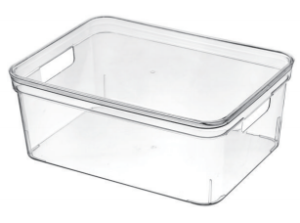
To demonstrate the concept, consider the following common storage box models: Box with Lid — a simple, common plastic container for storage that has a lid.
It’s lightweight and stackable, which makes it simple to store seasonal clothing, toys, books, or other items in a closet, under the bed, or in a storage room.
Because it’s plastic, it blocks moisture and dust; this is a practical choice for objects you want to shield but still have access to.
Its portability (facile to transport) is beneficial, as it allows you to reorganize storage, move it during cleaning, or relocate objects without the need to heavy-lift.
Transparency (or semi-transparency) facilitates the rapid identification of content without necessitating the opening of each box; this saves time and effort when attempting to locate items that are stored.
Similarly, other PET storage boxes (also known as “many-purpose organizer storage boxes with lids”) are employed in kitchens or pantries to store dry food, snacks, or books, with the emphasis being on a neat, clean appearance, easy cleaning, and secure lids.
These practical use cases illustrate the way a PET portable storage box with a lid is practical in daily life — it is used to arrange the home spaces and manage storage for seasonal rotation, movement, or even small-scale storage.
Tips for Maximizing Lifespan and Effectiveness
To maximize the usefulness, safety, and value of your PET portable storage containers, consider these suggestions:
Use designated boxes by type — avoid combining food, chemicals, tools, fabric, and documents in one box over time. This decreases the probability of contamination, odor transmission, and wear.
Clean before significant alterations to the content – especially when switching from food to non-food storage, or from oily items to clothing or paper. Use mild detergents and warm water; avoid harsh solvents that may adversely affect plastic.
Keep things stable — avoid direct sunlight, overly hot or otherwise damp locations. Plastic will degrade in the presence of ultraviolet light or high temperatures, and humidity can facilitate the growth of mold or mildew on the inside.
Avoid overloading or uneven stacking — pay attention to the weight limit that’s implicit in the design of the box; distribute the weight across the stack in order to avoid deformation.
Use labels or tags to identify content – especially when boxes are dense or stacked. This promotes efficiency in retrieving items and promotes organization.
Reconsider the process of recycling or segmenting old boxes — if the plastic has begun to show wear (cracks, brittleness, discoloration), retire the box — it’s more effective to replace than risk the breakage or failure of the plastic.
Is a PET Portable Storage Box with Lid Right for You? — When It Makes Sense
A PET portable storage box with a lid is ideal for when you want to:
A budget-friendly, lightweight, and reusable storage device for the home, office, or storage areas.
The capacity to preserve contents from dust, moisture, pests, especially for domestic goods, clothing, pantry supplies, pet supplies, documents, or toys.
Organizations that are stackable, modular, and utilize vertical space in an effective manner.
Portability and convenience— it’s easy to move content between rooms, move it around, or store it during the season.
Visibility of the contents – if the boxes are transparent or partially transparent, you can easily see what is inside without having to open the lids.
Flexibility dedicated to multiple functions – from household storage, transportation, pantry organization, to small-scale storage or warehouse settings.
However, if your storage requirements include heavy industrial equipment, fragile items that need cushioning, long-term archival materials, or items that are sensitive to temperature or fire, plastic storage boxes may not be appropriate. In these instances, more specialized storage (metal, wood, sealed containers, padded crates, safes, archival boxes) may be more appropriate.
Conclusion
A PET portable storage box with a lid is a simple yet powerful solution to storage that combines ease, safety, affordability, and flexibility. Whether you’re organizing your home’s closet, clearing out your space, storing seasonal items, or moving – these boxes serve as a practical, long-lasting, and reusable way to keep things safe, accessible, and organized.
By choosing the proper size and design, maintaining hygienic cleanliness, organizing with care, and honoring limitations (weight, environmental exposure, item type), you can receive years of dependable storage from these boxes. Many homes, small businesses, or storage facilities have a combination of utility and cost that other storage options cannot match.
In short: if you appreciate organization, portability, protection, and low-maintenance storage—a PET portable storage box with a lid is often the most practical, versatile, and generalizable option available.