


Article Summary:
A grain storage container is commonly called a silo, bin, or, in modern post-harvest systems, a sealed container for storing harvested grain that is intended to prevent the grain from being exposed to moisture, oxygen, insects, rodents, or microorganisms.
According to the FAO in its Post-Harvest Management of Cereals and Grains, as well as the USDA’s Grain Storage Handbook, airtight or sealed storage systems are most effective in reducing the loss of post-harvest goods and maintaining the quality of grain over extended storage periods.
These authoritative sources suggest that regulating the oxygen and moisture content of sealed storage containers for grain significantly diminishes the insects’ activity and promotes the growth of mold, making them important in modern agricultural chains of supply.
Introduction: Why Grain Storage Containers Matter More Than Ever
The storage of grain is one of the most important steps in the agricultural chain of value. From small-scale farmers to large-scale businesses, the capacity to safely and efficiently store food directly affects the safety of the food, the profitability of the business, and the stability of the market. While harvesting is the conclusion of the crop’s production, improper storage can quickly end months of hard work through the spoilage of the harvest, pest invasion, or the degradation of quality.
In this context, the question “What is the term for a grain storage container?” is more significant than the words themselves. It demonstrates a greater desire to understand the types, functions, and standards of performance associated with modern storage systems for grain, particularly the increasing importance of the sealed container in the global agriculture industry.
What Is a Grain Storage Container Called?
A storage container for grain is typically called a silo or bin, according to the region’s usage and design. However, in technical and professional contexts, these containers are more specifically categorized by their purpose and degree of seal.
Common abbreviations include:
Grain silo – A large vertical container for storing bulk grain.
Grain bin – It’s typically spherical and may be made of steel; it’s used on farms.
Hermetic container for storage – A storage device that is designed to minimize the amount of oxygen it contains.
Sealed storage containers for grain – A common term that describes the airtight nature of the industry.
Grain store – Large-scale commercial facilities for storing food.
Among these, the sealed container for storing grain has been popular due to its superior capacity to preserve the quality of the grain and reduce the amount of chemical pesticides used.
Understanding Sealed Grain Storage Containers
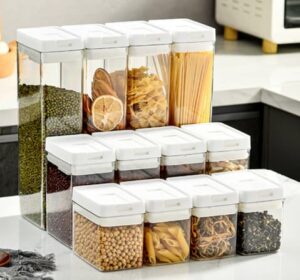
A container for storing grain that is sealed off is an airtight or nearly airtight vessel that is engineered to prevent the transmission of air and moisture from the internal environment to the external atmosphere. Sealed systems are dependent on controlled atmospheres to prevent the respiration of insects and the growth of fungi.
Central characteristics
Airtight design
Low oxygen content of the environment following the seal
Moisture regulation
Decreased reliance on chemical fumigation.
The research of FAO confirms that hermetic storage of grain that is sealed can reduce the loss of post-harvest stock by as much as 98 percent. This is particularly true in warm and humid climates.
Why Sealed Grain Storage Containers Are Essential
- Insect Protection
In containers with sealed storage capacity for grain, the oxygen levels decrease as a result of the respiration of the grain and the activity of insects. Once the oxygen concentration is below a critical threshold, insects will no longer be able to survive or reproduce. This natural mechanism for eliminating pests eliminates the necessity of repeated eradication.
- Mold and Mycotoxin Prevention
Moisture and oxygen are the primary causes of mold expansion. Sealed containers for storing grain that are filled with it both reduce the probability of aflatoxins and other mycotoxins that threaten to cause safety issues or lack of compliance with export regulations.
- Preservation of quality
Grain that is stored in sealed containers maintains:
A heavier testing regime
Constant water content
Increased rates of germination (for seeds)
This is of special importance to producers and suppliers who export.
Main Types of Grain Storage Containers
The variety of sizes, materials, and uses for storage is large. Below is a general description of industry-oriented matters.
- Traditional Silo’s of Grain
These are large vertical structures that are made of concrete or steel, and are commonly employed in commercial facilities that handle grain.
High capacity
Adept at long-term preservation
Often equipped with air circulation systems.
May or may not be completely sealed
While effective, many traditional silos are not inherently airtight unless they are designed as sealed systems.
- Bins with steel grips
Steel bins for storing grain are commonly employed on farms because of their modular nature and potential for growth.
Corrugated steel building
Roof ventilation and flooded areas
Can be enhanced to storage containers for grain that are sealed properly.
Modern designs have increasingly resorted to sealing technology to achieve hermetic results.
- Hermetic Bags and Adaptable Containers
The hermetic storage bags for grain are commonly employed in small- to medium-scale farming systems.
composed of multiple layers of polyethylene.
Portable and budget-friendly
Adept for long-term storage of short to medium term duration
Despite their flexibility, they are still technically sealed containers for storing grain that are properly sealed and maintained.
- Sturdy Sealed Grain Packing containers
These containers are made of metal or plastic that is resistant to airtightness. This type of container is specifically designed to hold air.
Rigid or mobile configurations
High efficiency of sealant application
Extended service life
Frequent in the storage of seeds and the handling of high-value crops.
These systems are closely associated with recommended practices following harvest.
Comparison of Grain Storage Container Types
| Container Type | Airtight Level | Typical Capacity | Common Use |
| Traditional Silo | Low–Medium | Very large | Commercial terminals |
| Steel Grain Bin | Medium–High (with sealing) | Medium–large | Farm storage |
| Hermetic Bag | High | Small–medium | Smallholders |
| Sealed Grain Storage Container | Very High | Small–large | Quality preservation |
How Sealed Grain Storage Containers Work?
The efficacy of sealed containers for storing grain is attributed to modified atmosphere storage.
- The process of oxygen depletion
Once sealed:
Insects and grains take in oxygen.
The concentration of CO2 is naturally elevated.
Insects are overwhelmed
The Mold activity is inhibited
This procedure is completely chemical-free, which is ideal for markets that require organic products and processing.
- Moisture Sustainability
Because the air exchange is limited, the sealed containers prevent the migration of moisture caused by temperature fluctuations, which is a common cause of condensation and the development of a rotten state in traditional bins.
Materials Used in Sealed Grain Storage Containers
- Steel
High-powered
Extended lifespan
necessitates precise attention to joints
- Aluminum
Lightweight
Corrosion-resistant
Higher price
- High-Density Polyethylene (HDPE)
Frequent in hermetic containers and bags.
Excellent moisture seal
limited structural capacity
The choice of material is dependent on the duration of storage, the capacity needed, and the budget.
Industry Applications of Sealed Grain Storage Containers
- On-Site Storage
Farmers are increasingly opting for sealed containers for storing grain that will be stored until conditions in the market improve, this diminishes the pressure to sell after harvest.
- Seed Packing
The viability of seeds is dependent on the controlled moisture and oxygen levels in the container, making sealed containers the most popular option for banks and companies that want to preserve seeds.
- Businesses that trade grain by the ton
Exporters employ sealed storage to maintain the safety of international regulations regarding food safety and reduce the chance of rejection.
- Emergency and long-term Grain Reserves
Governments and nonprofit organizations rely on sealed containers for long-term food security.
Key Selection Criteria for Sealed Grain Storage Containers
When selecting a sealed container for storing grain, professionals in the industry consider:
Airtight certification or testing information
Capacity and extensibility
compatibility with the equipment used for handling
Climate appropriateness
Maintenance requests
ASABE standards advocate the use of pressure testing as a dependable means of testing the performance of seals.
Installation and Maintenance Best Practices
Effective installation is pivotal in achieving the full potential of sealant performance.
- Installation Considerations
Base level
Effective gasket placement
The quality of the sealant at the joints and points of access.
- Maintenance
Constant monitoring of the seals
Maintaining humidity and temperature
Avoiding the unnecessary beginning
Even the most sealed container for grain storage can become corrupt if protocols for maintenance are ignored.
Sealed Grain Storage Containers vs Conventional Storage
Conventional storage is primarily dependent on the air and chemical treatments, while sealed storage focuses on environmental control.
Main differences include:
Lower utilization of chemical compounds
Reduced the expenditure of energy
Better storage of grain quality
Higher initial cost, but lower long-term expense
FAQs: Sealed Grain Storage Containers
Q1: What is the most appropriate term for a container for storing grains?
Common phrases include placing a bale of hay in a silo, storing hay in a bin, and utilizing a sealed storage container for grain. The most relevant term is based on the container’s design and the quality of its seal.
Q2: Do sealed containers for grain storage have the same hermetic properties as other containers?
Yes. Hermetic storage is the storage of goods in sealed containers that have airtight conditions. This is the most common attribute of a storage container for grain.
Q3: Can sealed containers for storing grain eliminate the need for fumigation?
In many instances, yes. The depletion of oxygen naturally regulates insects; this regulates the need for chemical eradication.
Q4: How long can corn be stored in a sealed container for storage?
When properly dried and sealed, grain can be stored for a number of months or even years with minimal loss of quality.
Q5: Are sealed containers for storing grain suitable for large operations?
Absolutely. Many modern commercial silos are now constructed or modified to operate as sealed storage containers for grain.
Conclusion
What is the term for a container for storing grains? While terms like silo and bin are still commonly used, the sealed storage container for grain represents the most advanced and beneficial solution to modern preservation of grain. Supported by decades of research from the FAO, the U.S. Department of Agriculture, and agricultural engineering organizations, sealed storage systems have an unusually long lifespan against insects, moisture, and deterioration. For farmers, traders, and policy makers, who focus on quality, safety, and sustainability, there are no longer any options for sealed storage containers in the grain industry; these are necessary.