요약
This comprehensive guide explores leading manufacturers of stackable drawer-type storage baskets, providing wholesale buyers with critical insights into product specifications, manufacturing standards, and sourcing strategies. Designed for B2B procurement professionals, this article covers technical parameters, quality benchmarks, and commercial considerations essential for making informed purchasing decisions in the plastic storage solutions sector.
As global demand for modular storage systems continues to expand across residential, commercial, and institutional markets, understanding manufacturer capabilities and product differentiation becomes paramount for competitive positioning. Working with reliable stackable drawer-type storage baskets manufacturers ensures consistent quality and supply chain efficiency.
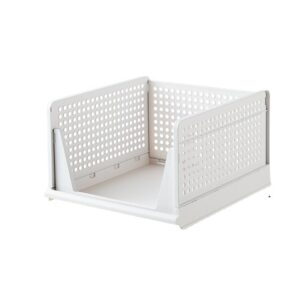
Understanding Stackable Drawer-Type Storage Baskets: Product Architecture and Design Principles
Core Structural Components and Material Engineering
Modern stackable drawer-type storage baskets utilize advanced polymer engineering to achieve optimal strength-to-weight ratios. The primary materials employed are Polypropylene (PP) and Polyethylene (PE), each offering distinct performance characteristics.
PP grades, particularly copolymer variants with MFI (Melt Flow Index) ratings between 10-30 g/10min, provide superior impact resistance at room temperature while maintaining structural rigidity. High-density polyethylene (HDPE) alternatives offer enhanced chemical resistance and lower temperature brittleness, making them suitable for cold storage applications.
Load-bearing capacity represents a critical specification for wholesale buyers. Premium-grade units typically support 15-25 kg per drawer when properly stacked, with reinforced corner ribbing and double-wall construction in high-stress areas. Leading stackable drawer-type storage baskets manufacturers conduct rigorous testing to validate these performance claims.
The drawer glide mechanism employs either friction-fit rails or ball-bearing systems. Friction-fit designs use precision-molded HDPE runners with 0.2mm tolerance specifications, ensuring smooth operation through 50,000+ cycle testing. Ball-bearing variants, while adding 15-20% to unit costs, provide whisper-quiet operation and extended service life in high-frequency access environments.
Frame integration points utilize interlocking boss-and-socket designs, with typical engagement depths of 8-12mm to prevent lateral displacement under load. Advanced manufacturers incorporate anti-slip texturing (Ra 3.2-6.3 μm surface roughness) on stacking surfaces, reducing slippage incidents by up to 73% compared to smooth-surface alternatives.
Standardized Dimensions and Modular Stacking Systems
Industry-standard sizing follows three primary classifications optimized for container shipping efficiency:
-
Compact Series: 350mm × 250mm × 180mm (per unit) – ideal for desktop organization and cosmetic storage
-
Standard Series: 420mm × 320mm × 220mm – the most versatile configuration for bedroom and closet applications
-
Large Series: 520mm × 380mm × 260mm – designed for bulky items and commercial inventory management
Vertical stacking limits vary by material grade and drawer configuration. Single-drawer units typically support 8-10 tier stacking (1.8-2.2m height) with maintained structural integrity, while multi-drawer assemblies recommend 4-6 tier maximums due to cumulative load factors.
Space optimization metrics demonstrate that modular systems achieve 68-74% volumetric efficiency compared to traditional fixed shelving, with the flexibility to reconfigure as storage needs evolve. Many stackable drawer-type storage baskets manufacturers now adopt the 32mm cabinet system standard, allowing compatibility with existing furniture ecosystems and aftermarket accessories. This standardization enables wholesale buyers to offer mixed-product solutions without compatibility concerns.
Global Manufacturing Landscape: Leading Suppliers and Production Capabilities
Tier-1 Manufacturers: Production Scale and Technical Certifications
The global stackable storage basket manufacturing sector concentrates among specialized producers with annual capacities ranging from 2 million to 15 million units. Leading stackable drawer-type storage baskets manufacturers maintain ISO 9001:2015 quality management certifications as baseline requirements, with progressive facilities adding ISO 14001:2015 environmental management systems to address sustainability concerns.
For food-contact applications—particularly kitchen and pantry storage variants—FDA 21 CFR 177.1520 compliance for polypropylene and LFGB (German Food Law) certification provides essential market access credentials for North American and European distribution channels.
Third-party testing through SGS, Intertek, or TÜV laboratories validates material safety claims, with typical testing protocols including:
-
Migration testing under acidic, aqueous, and fatty food simulants
-
Heavy metal content analysis (lead, cadmium, mercury limits per EU 10/2011)
-
Phthalate screening (DEHP, DBP, BBP, DINP concentrations)
Top-tier stackable drawer-type storage baskets manufacturers operate Class 100,000 cleanroom injection molding facilities for premium product lines, minimizing particulate contamination that affects surface finish quality. Automated quality control systems employing machine vision inspection achieve defect detection rates exceeding 99.5%, scanning for flash, sink marks, color deviation, and dimensional variance at production speeds of 180-240 units/hour per molding line.
Regional Manufacturing Hubs and Supply Chain Advantages
China’s Zhejiang Province (Taizhou, Ningbo) and Guangdong Province (Shantou, Dongguan) represent the world’s largest concentration of plastic storage manufacturers, collectively accounting for approximately 67% of global export volume. These clusters offer ecosystem advantages, including:
-
Raw material proximity (PP/PE resin suppliers within a 50km radius)
-
Specialized tooling workshops with 7-10 day mold modification turnaround
-
Integrated logistics infrastructure (direct factory-to-port transportation)
Lead times from Chinese stackable drawer-type storage baskets manufacturers typically range from 35 to 45 days (FOB) for standard products with existing tooling, extending to 65 to 75 days for fully customized designs requiring new mold fabrication.
Southeast Asian alternatives—particularly Vietnam, Thailand, and Indonesia—have emerged as secondary sourcing options, offering 8-12% cost advantages due to preferential trade agreements and lower labor costs, though with generally smaller production scales (500K-3M units annually) and longer lead times (45-60 days standard). Evaluating multiple stackable drawer-type storage baskets manufacturers across regions helps mitigate supply chain risks.
Manufacturer Comparison Matrix
| Manufacturer | Location | Annual Capacity | Certifications | MOQ (units) | Lead Time | 맞춤화 |
|---|---|---|---|---|---|---|
| Zhejiang Hengxin Plastic | Taizhou, China | 12M | ISO 9001, FDA | 1,000 | 35 days | Full custom |
| Shantou Chenghai Storage Co. | Guangdong, China | 8M | ISO 9001/14001, LFGB | 500 | 40 days | Color/logo |
| Ningbo Homeful Living | Ningbo, China | 15M | ISO 9001, BSCI | 2,000 | 38 days | Full custom |
| Thai Plastic Industries | Bangkok, Thailand | 3M | 시험: | 1,500 | 50 days | Limited |
| Vietnam Storage Solutions | Hanoi, Vietnam | 2.5M | 시험: | 1,000 | 55 days | Color/logo |
| PT Indo Storage | Jakarta, Indonesia | 1.8M | 시험: | 800 | 60 days | Limited |
Experienced stackable drawer-type storage basket manufacturers continuously update their certifications and production capabilities to meet evolving market demands.
Technical Specifications and Quality Standards for Wholesale Procurement
Material Performance Metrics and Durability Testing
Wholesale buyers should specify material performance requirements using standardized testing protocols. Impact resistance measured per ASTM D256 (Izod impact test) should demonstrate minimum values of 4.5 kJ/m² for PP copolymer formulations at 23°C, with cold-temperature performance maintaining 2.8 kJ/m² at -20°C for products marketed to northern climate regions.
Temperature tolerance specifications typically guarantee structural integrity across -20°C to +80°C operational ranges, validated through thermal cycling tests (500 cycles, 4-hour intervals). This range accommodates garage storage in cold climates and attic applications where summer temperatures exceed ambient conditions.
UV stability ratings become critical for products used in sunroom or semi-outdoor environments, with UV8 ratings (2000 hours QUV-A exposure per ASTM G154) ensuring less than 5% tensile strength degradation and minimal color fading (ΔE < 3 per CIE Lab color space). Reputable stackable drawer-type storage baskets manufacturers provide UV test reports upon request.
Stress-crack resistance testing (ASTM D1693) for HDPE variants should demonstrate 500+ hour performance under 10% Igepal CO-630 solution at 50°C, indicating resistance to household chemical exposure. Manufacturers employing virgin resin formulations typically outperform recycled-content alternatives by 25-40% in long-term durability metrics, though premium recycled formulations with proper additives can achieve comparable performance.
Customization Parameters: Color, Branding, and Functional Modifications
Color customization employs Pantone TPG (Textile Paper Green) matching systems, with manufacturers typically offering 15-20 standard colors from existing masterbatch inventory (no MOQ premium) and unlimited custom colors requiring 500-1,000 unit minimums to justify masterbatch production. Color consistency tolerances of ΔE ≤ 1.5 between production batches require spectrophotometric quality control and proper masterbatch dispersion protocols.
Branding application methods include:
-
Silk-screen printing: 1-4 color capability, excellent durability (500+ wash cycles), $0.08-0.15 per unit cost
-
Hot stamping: Metallic finishes, premium appearance, $0.12-0.20 per unit
-
In-mold labeling (IML): Integrated during molding, permanent application, $0.25-0.40 per unit premium
-
Pad printing: Complex surfaces, 1-2 colors, $0.10-0.18 per unit
Functional modifications frequently requested include adjustable drawer dividers (removable partition systems), transparent window panels (requiring two-shot molding or ultrasonic welding), and integrated labeling systems (card holder clips or writable surfaces). These modifications typically add 15-35% to base unit costs, depending on complexity. Flexible stackable drawer-type storage baskets manufacturers can accommodate such customizations with reasonable lead time adjustments.
Commercial Considerations: Pricing Models and Order Fulfillment
Wholesale Pricing Structures and Volume Discounts
FOB pricing for standard stackable drawer storage baskets follows tiered volume structures. Representative pricing for mid-range quality (PP copolymer, standard colors, no customization):
| Volume | Price per Unit |
|---|---|
| 500 units | $4.80-5.50 |
| 1,000 units | $4.20-4.80 |
| 5,000 units | $3.50-4.10 |
| 10,000+ units | $3.10-3.70 |
Premium features command additional pricing: reinforced construction (+$0.40-0.60), ball-bearing slides (+$0.80-1.20), transparent materials (+$0.50-0.90), and eco-certified recycled content (+$0.30-0.50). Custom mold tooling for proprietary designs ranges $3,500-8,500 depending on cavity count and complexity, with typical amortization over 15,000-25,000 units for cost-neutral customization. Many stackable drawer-type storage baskets manufacturers offer mold-sharing programs to reduce upfront investment.
Payment terms predominantly follow 30% T/T deposit, 70% against B/L copy structures for established buyers, with L/C at sight available for larger orders ($50K+ value) at 2-3% bank fee costs. Manufacturers offering O/A (open account) terms typically require 12+ months of trading history and credit references.
Logistics and Packaging Standards for Container Shipping
Carton packaging specifications optimize container loading efficiency while protecting products during international transit. Standard configurations:
-
Inner packaging: PE bag (50-80 micron) with desiccant packet
-
Carton specifications: 5-layer corrugated cardboard (B-flute, 200# test strength)
-
Units per carton: 4-8 pieces, depending on size category
-
Carton dimensions: Designed for 1:2 or 2:3 aspect ratios, maximizing container cube utilization
Container loading efficiency for standard series products:
-
20′ GP container: 1,850-2,100 units (depending on packaging configuration)
-
40′ GP container: 3,800-4,300 units
-
40′ HQ container: 4,500-5,100 units (optimal for this product category)
Protective packaging for drawer glide components includes foam corner blocks and corrugated dividers, preventing inter-product friction during transit. Professional stackable drawer-type storage baskets manufacturers provide carton drop testing certification (ISTA 1A standard, 76cm drop height), demonstrating package integrity for typical handling scenarios.
FAQ
Q1: What is the typical minimum order quantity (MOQ) for stackable drawer storage baskets from manufacturers?
MOQs vary significantly by customization level and manufacturer scale. For standard products in existing colors, MOQs range from 500-2,000 units, with smaller manufacturers often accepting lower minimums (300-500 units) at slightly higher per-unit costs. Full customization requiring new molds typically demands 3,000-5,000 unit commitments to justify tooling investments. Some stackable drawer-type storage baskets manufacturers offer “sample mold” options (single-cavity tooling) for 1,000-1,500 unit initial orders, though per-unit costs run 25-35% higher than production molds.
Q2: How do I verify the load-bearing capacity claims of different suppliers?
Request third-party testing reports following BIFMA (Business and Institutional Furniture Manufacturers Association) standards or equivalent protocols. Specific tests should include static load testing (applying 150% of rated capacity for 24 hours) and dynamic load simulation (cyclic loading at 80% capacity for 10,000 cycles). Reputable stackable drawer-type storage baskets manufacturers provide test reports from accredited laboratories (SGS, Intertek, TÜV) with traceable sample identification. Consider conducting independent verification testing on pre-production samples for large-volume commitments exceeding $100K.
Q3: Are there eco-friendly material alternatives to traditional PP plastic for these products?
Several sustainable options exist with varying performance trade-offs: Post-consumer recycled PP/PE (20-50% recycled content) maintains 85-95% of virgin material performance with proper additive packages, adding $0.30-0.50 per unit. Bio-based PP derived from renewable feedstocks offers identical performance to petroleum-based variants but commands 40-60% price premiums with limited supplier availability. Biodegradable alternatives (PLA, PHA) face limitations in load-bearing applications and temperature tolerance, making them unsuitable for most drawer storage applications. Leading stackable drawer-type storage baskets manufacturers are increasingly investing in recycled-content solutions without compromising durability. For genuine sustainability impact, focus on durable virgin PP designs with extended service life (10+ years) rather than biodegradable materials with compromised functionality.
결론
Selecting the right stackable drawer-type storage baskets manufacturer requires balancing technical specifications, production capabilities, and commercial terms. By evaluating suppliers against standardized quality metrics—including material certifications, load-bearing performance, and manufacturing scale—wholesale buyers can optimize their sourcing strategy for both cost-efficiency and product reliability in competitive retail markets.
The concentration of manufacturing expertise in China’s Zhejiang and Guangdong provinces offers unmatched economies of scale and customization flexibility, while emerging Southeast Asian alternatives provide strategic diversification options. Successful procurement demands a clear specification of performance requirements, thorough supplier vetting through third-party certifications, and realistic MOQ planning aligned with market demand projections.
As consumer preferences increasingly favor modular, adaptable storage solutions, manufacturers demonstrating innovation in material science, sustainable practices, and functional design will command premium market positioning. Partnering with established stackable drawer-type storage baskets manufacturers ensures long-term product consistency and responsive support for evolving buyer needs.
Ready to source from top stackable drawer-type storage baskets manufacturers? Use the technical benchmarks and supplier comparison matrix above to initiate qualified supplier conversations and request samples before committing to large-volume production orders.