

In contemporary office and industrial storage spaces, clear, portable storage boxes have proven to be among the most popular and versatile organizational solutions. Used for home organization, warehouse management, or on-the-go storage, these clear containers combine visibility, portability, and durability in one design.
How good are transparent portable storage boxes? Do they stay clear and durable over time? What materials and what production technologies are their quality dependent on?
This write-up delivers a full, SEO-ready, detailed but easy-to-follow manual discussing every side of clear carry storage bins — starting from materials and build design to making, performance, checking, and eco-friendliness. We will look at actual pluses and minuses to help you decide if they are worth buying.
What Is a Transparent Portable Storage Box?
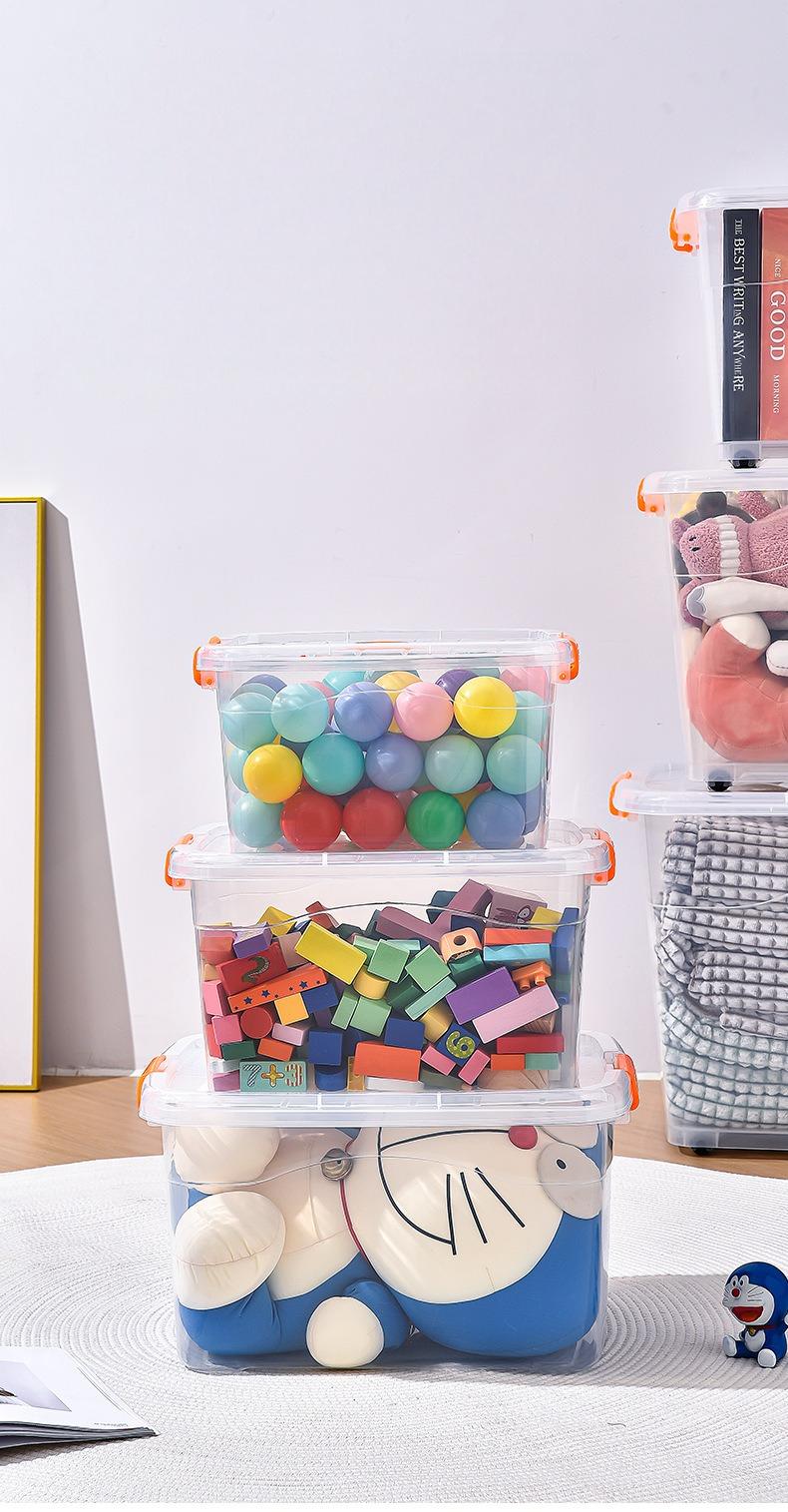
A transparent portable storage box refers to a container used for keeping and arranging things produced from clear plastic or acrylic substances. Users can view what is inside it without taking off the cover.. Most have handles and locks, plus either a foldable or just plain stackable structure, making mobility achievable together with convenience. Such boxes find household, office, and workshop usage as well as application in medical or laboratory environments where clarity accompanies a requirement for hygiene.
Clear-You can see right through it. Light-Easy to carry and often comes with something to hold or roll. Strong-made to not break, get marks, or look old. Can Be Piled-Good for using all the space in small or big keeping places. Seals tightly to keep out dust, wetness, and sometimes water.
Are transparent portable storage boxes good?
Of course they are!
Transparent portable storage boxes, which are transparent and portable, have triple functionality. They integrate storage, visibility, and portability at the same time, fitting for households, offices, as well as when traveling.
Advantages:
- Easily visible through transparency
All the things that have been kept can be easily viewed without having to open the box to look inside. These are best suited for keeping tiny things, cosmetics, accessories, medicines, etc.
- Portable; can be carried easily by individuals
Most designs are lightweight and incorporate handles or fasteners for ease during business trips and travel by saving space.
- Organized storage due to the partitioned accessories cutlery storage case
Usually available with removable partitions adjusted to the size of the items, hence they come in handy for maintaining accessory cutlery neatly.
- Protection against dust and moisture
With a good sealed effect, the storage box can have major benefits in anti-dust and moisture prevention, which extends the life of items and prevents insects from getting into it.
- Uses: Cosmetics, medicine, jewelry, small accessories
Office: Pens, paper clips, phone chargers, flash drives
Travel: Shampoo, hairdryers, travel-size bottles.

Material Selection and Engineering Challenges
Balancing Transparency, Strength, and Scratch Resistance
The greatest design challenge for transparent boxes lies in finding the right balance between clarity, impact resistance, and surface durability. High-transparency materials often sacrifice strength, while tougher polymers can appear cloudy or tinted.
| Material Property Comparison | Transparency (%) | Impact Strength | Scratch Resistance | Cost Level |
| PET (Polyethylene Terephthalate) | 90–92 | Moderate | Good | Low |
| PMMA (Acrylic) | 92–94 | Medium | Poor (requires coating) | Medium |
| PC (Polycarbonate) | 88–90 | Excellent | Moderate | High |
| PP (Polypropylene) | 80–85 | Good | Good | Low |
| Transparent ABS | 85–88 | Excellent | Good | Medium |
Common Material Choices
PET: Lightweight, affordable, and recyclable — great for regular keeping, but not strong in high heat.
PMMA (Acrylic): Gives the best clear view, but can get scratched if not coated.
PC (Polycarbonate): Very tough and holds up well against heat, good for hard use or outside needs.
Transparent PP or ABS: Balanced traits and low price, good choice for foldable or easy-to-carry styles.
Advanced Engineering Trade-offs
Manufacturers face complex trade-offs:
- Optical clarity vs rigidity
- Weight reduction vs impact resistance
- Cost control vs longevity
- Glossiness vs anti-fog or matte surface treatment
These decisions directly influence product pricing, visual appeal, and durability.
Manufacturing and Structural Design
Molding and Forming Technologies
Transparent portable boxes can be made through:
- Injection molding – Most common; high precision and complex shapes.
- Blow molding – Suitable for hollow and lightweight forms.
- Thermoforming – Ideal for thin sheets with curved profiles.
- Hybrid injection-folding design – Combines rigid panels with flexible hinges.
Hinge and Folding Design
Durability often depends on hinge strength and repeated fold endurance.
Advanced boxes use:
- Living hinges molded from PP for 10,000+ folds.
- Mechanical pin hinges for detachable lids.
- Dual-axis folding for compact portability.
Locking, Sealing, and Connection Variants
Great sealing avoids dust, water, or miscues: Latch locks or snap joints give easy opening/closing. Silicone gaskets or rubber seals ensure of airtight closing. Ultrasonic welding or adhesive bonding gives high high-strength joint.
Seam and Assembly Choices
To connect panels and keep clarity, Ultrasonic welding has no glue lines and gives a clean finish. Screw fastening is for modular or replaceable parts. Adhesive bonding is clear and smooth-edged edged but it may age faster.
Durability, Lifespan, and Aging Resistance
Transparent plastics degrade differently from opaque ones, especially under UV light, heat, or mechanical stress.
Common Aging Problems
Yellowing or hazing due to UV exposure.
Stress cracking under heavy loads.
Scratches and abrasions from daily use.
Thermal deformation from high-temperature storage.
Anti-Aging Solutions
| Problem | Technical Solution |
| UV Yellowing | Add UV stabilizers or surface coatings |
| Scratching | Apply hard-coat or anti-scratch layer |
| Stress Cracks | Use flexible copolymers or annealing |
| Temperature Damage | Choose high-Tg materials like PC |
Environmental Testing
Manufacturers perform accelerated aging tests to simulate years of sunlight exposure in a few weeks, ensuring optical stability and mechanical strength remain intact.
Quality Testing and Standardization
Reliable transparent boxes must pass multiple standardized tests before entering the market.
| Test Type | Standard / Metric | Purpose |
| Transparency Test | ASTM D1003 (Haze & Light Transmission) | Evaluate visual clarity |
| Impact Resistance Test | Drop Test / ISO 179 | Ensure breakage resistance |
| Scratch Resistance Test | Pencil Hardness / Taber Abrasion | Assess surface hardness |
| Load-bearing Test | Static Load (kg/cm²) | Evaluate stacking capability |
| Seal & Water Resistance | IPX2–IPX4 rating | Test waterproofing and dustproofing |
| Thermal Cycling | -20°C to 80°C cycles | Simulate seasonal variation durability |
Key Quality Goals:
- High transparency (>90%)
- Strong impact resistance
- Tight seal integrity
- Long lifecycle (>3 years average domestic use)
Automation, Efficiency, and Cost Control
Transparent box production benefits significantly from automation and precision mold manufacturing.
Automatic Injection and Blow Molding
Composition of robotic arms, which would increase the production consistency. Closed loop temperature control, material uniformity assurance. Optical inspection for automatic detection of surface flaws.
Mold Making and Life
Precision Feeds (CNC + EDM) ensure dimensional precision up to ±0.02mm.Nickel or chrome coatings on the mold cavity improve mirror-like clarity.Tool life: Industrial grade molds, over 1 million cycles.
Post Processing
After molding, several finishing processes that will add a qualitative value to the product: edge trimming and polishing for clarity; Printing logos or etching with lasers for brand marks.
Cost Efficiency Table:
| Process | Automation Level | Impact on Cost (%) |
| Injection Molding | High | 40–50% of total |
| Post-Processing | Medium | 20–25% |
| Assembly | Medium | 15–20% |
| Packaging | Low–Medium | 5–10% |
Environmental and Regulatory Compliance
Recyclability and Sustainable Materials
Environmental responsibility is now a key purchasing factor for both consumers and corporations.
Many transparent storage boxes are being upgraded using:
- Recycled PET (rPET) or bio-based PP.
- Energy-efficient molding systems reducing CO₂ emissions.
- Minimal packaging and modular repairable design.
Compliance with International Regulations
Producers must meet:
- EU REACH and RoHS – limits hazardous chemicals.
- FDA / LFGB food-contact safety – for food-grade boxes.
- ISO 14001 environmental certification – for sustainable manufacturing.
Carbon Reduction and Circular Economy
Leading manufacturers integrate recycling lines for:
Grinding defective boxes.
Re-extruding granules for reuse.
Tracking life-cycle CO₂ through digital systems.
Common Consumer Questions (FAQ Section)
Q1: What materials are transparent storage boxes made of?
They are mainly made of PET, PP, acrylic (PMMA), or PC — used based on what strength and clarity properties/factors decide. PET and PP are just light weights to carry; on the other hand, heavy-duty, impact-resistant boxes are made from PC.
Q2: How transparent are they?
Light transmission for acrylic and PET boxes can be more than 90% — practically speaking, these are glass-like boxes. The box may be somewhat translucent if it is made from PP or ABS.
Q3: Are transparent boxes waterproof or dustproof?
Yes, Premium versions do come with either silicone sealing strips or snap-lock lids that are dust-proof and splash-resistant.
Q4: How strong and durable are they?
Strength and durability? That of the material and its thickness. PC boxes dropped from more than 1.5 meters will not crack, PP boxes under any stacking load perform very well.
Q5: How easy are they to clean?
They can be wiped clean using mild soap and water. Avoid alcohol or strong solvents that can cause surface stress cracking, especially on acrylic.
Q6: Do transparent boxes scratch easily?
Acrylic is more prone to scratches, but newer models include anti-scratch coatings or hard-shell lamination for longer clarity retention.
Q7: Are they foldable or portable for travel?
Yes. Many collapsible models can reduce volume by 50–70% when not in use — perfect for mobile professionals or compact living spaces.
Q8: Are the products food-safe or safe for baby products? The use of food-safe PET, PP, PC, which is FDA or LFGB certified, is non-toxic and also free from BPA making them perfect to be used in kitchens or even nurseries. Q9: Are clear boxes environmentally friendly? Most manufacturers use recycled materials, energy-saving processes, and reduced designs to have a smaller impact on the environment.
User Experience and Market Trends
Transparent portable boxes are favored across multiple market segments:
| Segment | Key Use Case | Preferred Material |
| Home Organization | Closet, pantry, kids’ toys | PET / PP |
| Office & Workshop | Stationery, cables, tools | PP / ABS |
| Medical & Lab | Sample storage, sterilization | PC / Acrylic |
| Outdoor / Travel | Camping gear, cosmetics | PC / ABS |
Consumer trends (2020–2025):
- +25% increase in transparent storage box sales globally.
- Shift toward collapsible and modular systems.
- Rising interest in eco-friendly, BPA-free designs.
Conclusion
Yes, of course, provided they are made from good quality material and proper design, then it is an unbeatable combination regarding visibility, convenience, and durability all in one.
Best in engineering & sustainability by the leading transparent boxes exhibit:
Advanced Material Science – Clarity and strength through PET, PC, PP, ABS
Reliable structure – Durable hinges and tight seals
Rigorous Transparency Testing: Impact resistance and years of clarity
Eco-friendly innovation through raw material recycling & energy-saving production
For home organization and storage, travel organization, and industrial logistics, clear portable boxes are among the most advanced, efficient, and earth-friendly storage applications that develop right in line with technology as well as preservation trends.